Activity #7
Sucess
Activity #7: Creating a Low-Fidelity Prototype of Your Personal Portfolio
What is a Low-Fidelity Prototype?
A low-fidelity prototype is a simple, early version of a product or interface used to visualize concepts, structure, and user flow without focusing on detailed design elements. It typically involves basic shapes, wireframes, and placeholder text or images, rather than polished visuals or interactive elements.
Key Characteristics of a Low-Fidelity Prototype:
Simplicity: Uses basic shapes (like rectangles and circles) and minimal detail.
Quick and Inexpensive: Fast to create, allowing for easy iteration and feedback.
Focus on Functionality: Emphasizes layout, structure, and overall functionality rather than design aesthetics.
Placeholder Content: Often includes "Lorem Ipsum" text and simple image placeholders.
Static or Limited Interactivity: May have basic clickable areas or no interactivity at all.
Purpose of a Low-Fidelity Prototype:
Idea Validation: Helps in quickly validating concepts and ideas with stakeholders or users.
User Flow Exploration: Allows designers to explore and iterate on the user journey and navigation without getting bogged down by details.
Feedback Collection: Provides a tangible model for gathering early feedback, making it easier to identify and fix issues before moving to high-fidelity designs.
My Low- Fidelity Prototype Portfolio:
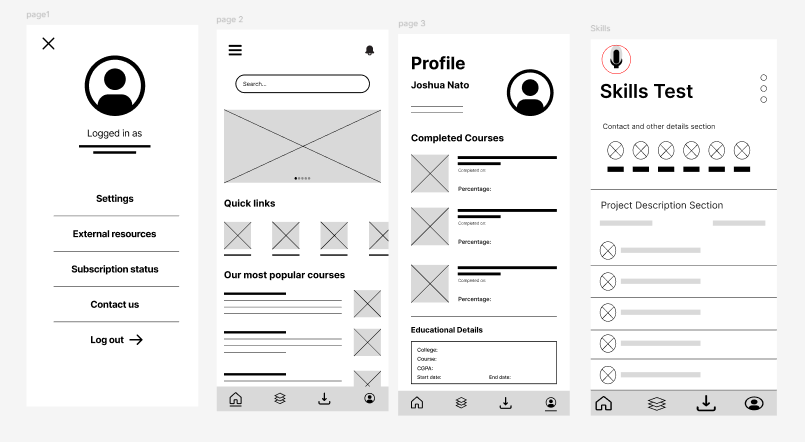
A low-fidelity prototype uses basic shapes and lines to create a rough draft of your design. It focuses on the overall layout and functionality, not visual details. This approach helps you quickly test and iterate on your ideas before investing in a high-fidelity prototype.